Discover spiritual messages, dreams and angel numbers that guide your soul’s journey..




Quick Answer
In simple words, spirituality is the search for meaning, purpose and connection with something larger than yourself, whether that is God, nature, other people or your own inner life. It can happen inside a religion or outside one, and it shows up in everyday practices like prayer, meditation, gratitude, time in nature and acts of kindness.
- Short definition: the personal search for meaning, purpose and connection
- Spirituality vs religion: religion is a shared system of beliefs and practices; spirituality is the personal experience, which may or may not include religion
- Examples: prayer, meditation, journaling, gratitude, service, quiet time in nature
- Why it matters: many people find it gives them direction, comfort and resilience
“Spirituality” is one of those words everyone uses and few people define. This guide explains what spirituality means in plain language, how it differs from religion, how psychology and Christianity describe it, and simple ways to explore it in your own life.
Define Spirituality: The Meaning in One Sentence
If you need to define spirituality in a single line: spirituality is the personal search for meaning, purpose and connection with something larger than yourself.
Merriam-Webster defines spirituality as “the quality or state of being spiritual”. Most modern definitions add three ideas:
- Meaning: asking what your life is for and what matters most to you
- Connection: feeling part of something bigger, such as God, a community or the natural world
- Inner growth: practices that help you live by your values and become more patient, honest and kind
So when someone asks “what do you mean by spirituality?”, they usually mean this personal search, which can happen inside a religion or completely outside one.
Is Spirituality the Same as Religion?
Not exactly. They often overlap, but they are not the same thing:
- Religion is a shared system of beliefs, scriptures, rituals and community, such as Christianity, Islam, Hinduism or Buddhism.
- Spirituality is the personal, inner experience of meaning and connection.
Many religious people describe their faith as deeply spiritual. Others call themselves “spiritual but not religious”. A 2023 Pew Research Center survey found that about seven in ten U.S. adults describe themselves as spiritual in some way, and around one in five say they are spiritual but not religious.
What Is Spirituality in Psychology?

Psychologists usually describe spirituality as a sense of meaning, purpose and connection, and study how it affects wellbeing. Research generally links a strong sense of meaning and belonging with better coping during hard times, though results vary from person to person. Spirituality is not a replacement for professional help, but for many people it is one source of resilience alongside relationships, health and support.
What Is Spirituality in Christianity?
In Christianity, spirituality means living in a relationship with God through Jesus and the Holy Spirit. It is expressed through prayer, worship, reading scripture, community and loving others. Paul describes its fruit as “love, joy, peace, forbearance, kindness, goodness, faithfulness, gentleness and self-control” (Galatians 5:22-23).
What is spiritual warfare?
In Christian teaching, spiritual warfare is the idea that believers face a real struggle against evil, described in Ephesians 6:12 as a struggle “not against flesh and blood” but against spiritual forces. Christians respond through prayer, scripture and faith, often using the image of the “armor of God” from the same chapter.
Examples of Spirituality in Everyday Life
Spirituality does not have to look dramatic. Common examples include:
- Prayer or meditation: setting aside time to be still and reflect
- Gratitude: noticing and naming what you are thankful for
- Time in nature: feeling connected to the world around you
- Service and kindness: helping others without expecting anything back
- Journaling: writing to understand your thoughts and values
- Rituals: lighting a candle, a weekly day of rest, or a moment of silence before meals
- Noticing signs: some people find meaning in symbols like angel numbers or dreams
Types of Spirituality
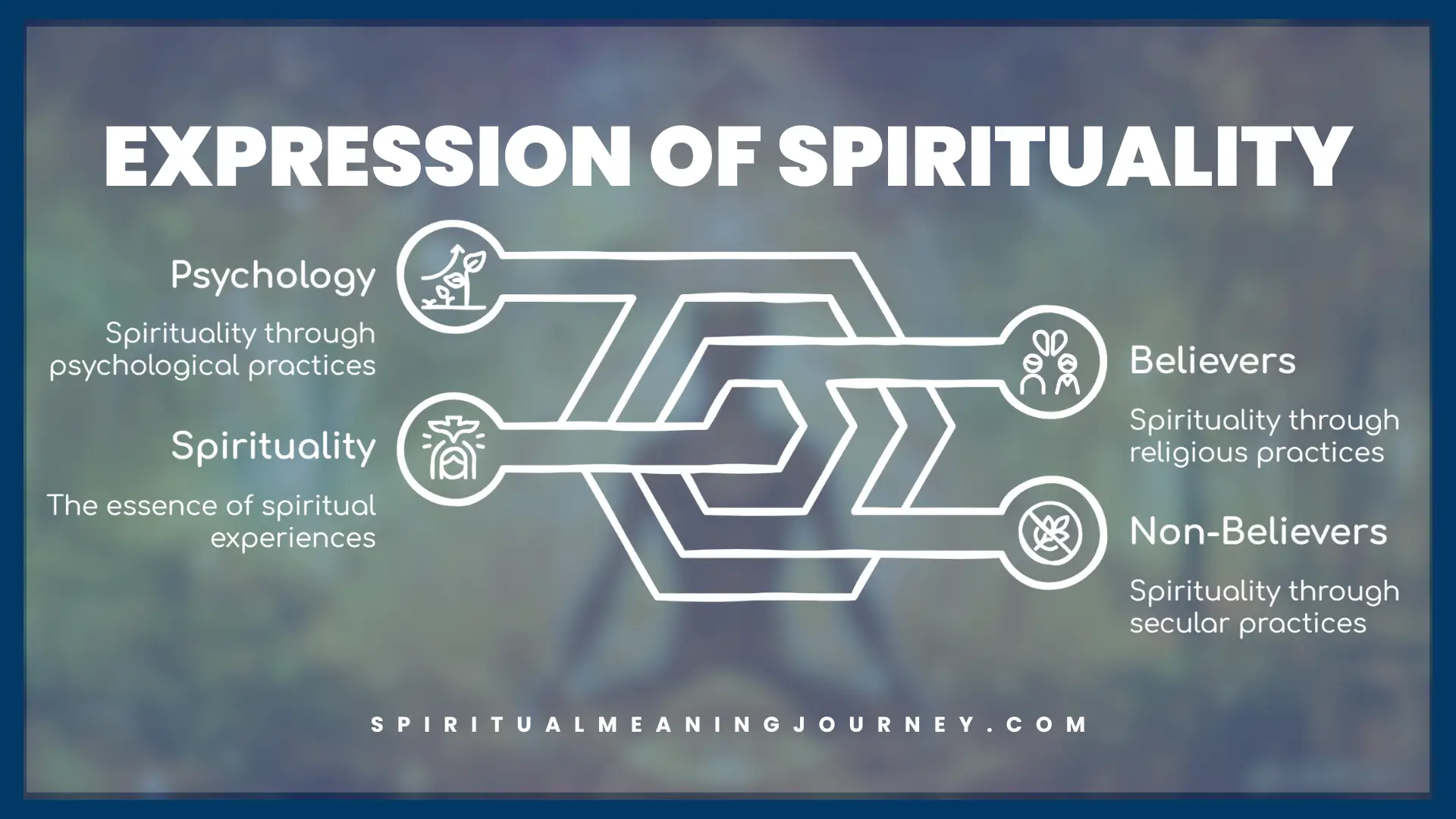
People experience spirituality in different ways. Common types include:
- Religious spirituality: rooted in a faith tradition and its practices
- Nature-based spirituality: feeling connected through the natural world
- Humanistic spirituality: finding meaning through relationships, service and values
- Contemplative spirituality: centred on meditation, prayer and inner stillness
Many people combine several of these over their lifetime.
How to Start Exploring Your Spirituality
1. Ask yourself what gives your life meaning, and write down your answers.
2. Try one small daily practice, such as five minutes of quiet, prayer or gratitude.
3. Spend time outdoors without your phone.
4. Read or listen to a tradition that interests you, with an open mind.
5. Connect with others, in a faith community, a meditation group or simply with friends who share your values.
You can also read our guides to body, soul and spirit and what spiritual healing is, or try our free spirit animal quiz.
Frequently Asked Questions
What is the simple definition of spirituality?
Spirituality is the personal search for meaning, purpose and connection with something larger than yourself, such as God, nature or other people.
What is spirituality in one word?
If you had to choose one word, “connection” comes closest: connection to God or something greater, to others, and to your own inner life.
Is spirituality the same as religion?
No. Religion is a shared system of beliefs and practices, while spirituality is the personal experience of meaning and connection. Many people are both religious and spiritual; others are spiritual but not religious.
What are examples of spirituality?
Prayer, meditation, gratitude, journaling, time in nature, acts of service and personal rituals are all common examples of spirituality in everyday life.
What does spirituality mean in psychology?
Psychologists describe spirituality as a sense of meaning, purpose and connection, and study how it affects wellbeing and coping.
What is spirituality in Christianity?
In Christianity, spirituality means living in a relationship with God through Jesus and the Holy Spirit, expressed through prayer, worship, scripture and love for others.
Disclaimer: The information shared on Spiritual Meaning Journey is provided for general informational and educational purposes only. We do not claim any absolute truth or authority over spiritual or symbolic interpretations. All insights and explanations are intended to inspire personal reflection, readers are encouraged to use their own understanding, beliefs, and judgment. This content should not be taken as professional, religious, or psychological advice.